
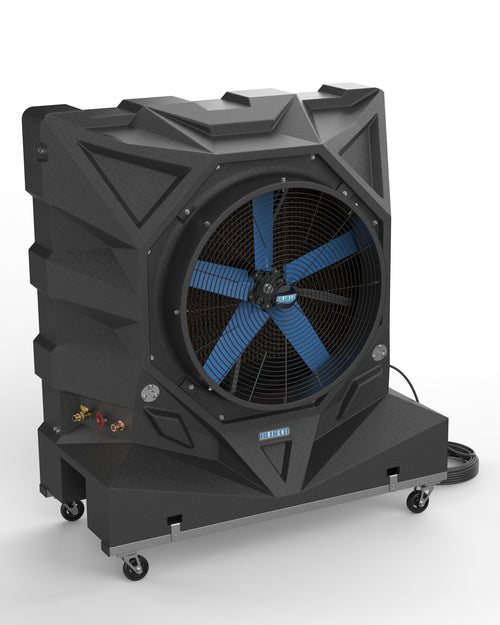
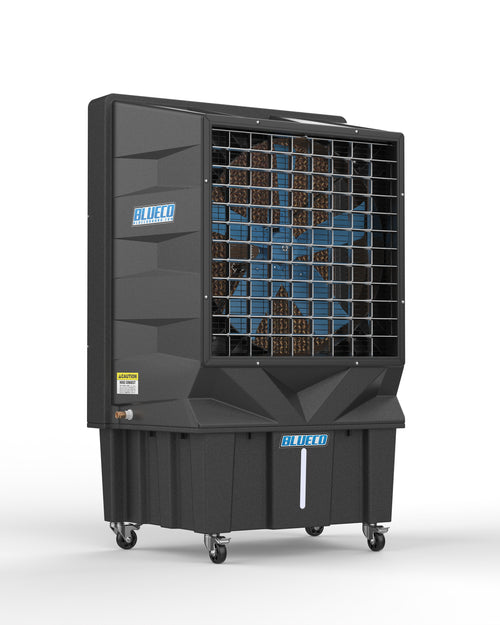
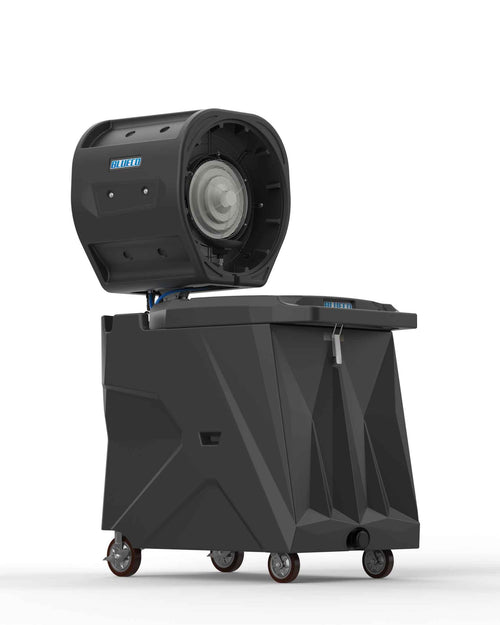



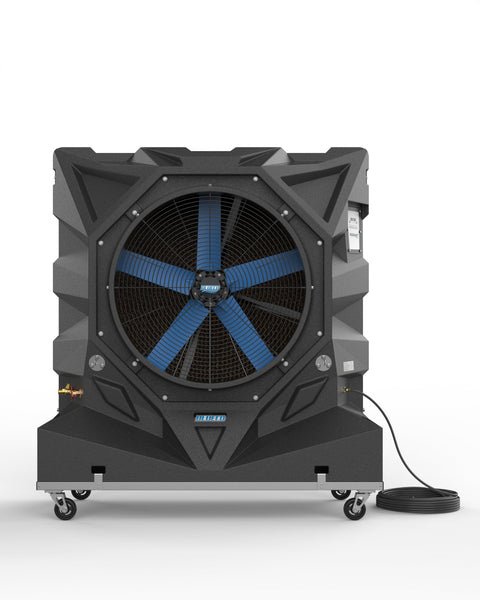
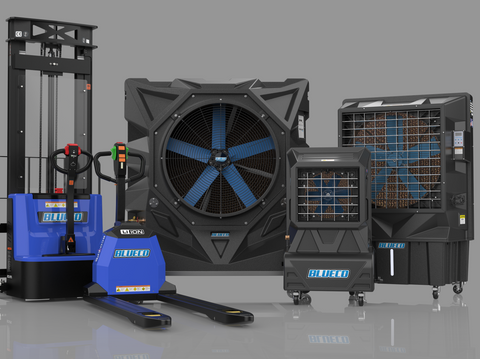
When summer temperatures soar, finding affordable, energy-efficient cooling solutions becomes essential for workshop owners, garage enthusiasts, and homeowners seeking to create comfortable outdoor spaces. Traditional air conditioning systems consume enormous amounts of electricity and often prove impractical for open environments, workshops, or semi-enclosed spaces. This is where evaporative coolers emerge as an innovative, cost-effective alternative that transforms how people cool diverse spaces. At BlueCo Brand, we offer premium portable evaporative air cooler solutions engineered to deliver remarkable cooling performance while consuming a fraction of the energy required by conventional AC systems. This comprehensive guide explores how evaporative coolers work, their ideal applications, and why they represent the smart choice for workshops, garages, patios, and beyond.
What Are Evaporative Coolers? Understanding the Technology
Evaporative coolers—commonly called "swamp coolers" or "desert coolers"—represent a fundamentally different cooling philosophy than traditional air conditioning. Rather than using energy-intensive refrigerant compression systems, evaporative coolers harness the natural thermodynamic principle of water evaporation to cool air efficiently and sustainably.
An evaporative cooler operates on a beautifully simple concept: when water evaporates, it absorbs heat energy from its surroundings without requiring synthetic refrigerants or complex mechanical systems. This process, rooted in latent heat transfer, requires only three basic components: air, water, and minimal electricity to power a fan and pump. This elegant simplicity distinguishes evaporative coolers from AC units while delivering superior energy efficiency and lower operating costs.
The beauty of evaporative cooling technology lies in its accessibility and effectiveness. A portable evaporative air cooler can be installed anywhere—your workshop, garage, patio, greenhouse, or warehouse—without complex ductwork, permanent installation, or professional HVAC technicians. Fill the water reservoir, plug it in, and experience immediate cooling benefits. For homeowners, small business operators, and facility managers seeking affordable climate control, evaporative coolers offer an unbeatable combination of simplicity, economy, and environmental responsibility.
How Evaporative Coolers Work: The Science Behind the Breeze
Understanding the mechanics of evaporative cooling reveals why this technology delivers exceptional results in appropriate environments.
The Evaporation Process and Heat Absorption
The foundation of evaporative cooling rests on a fundamental physics principle: as liquid water transforms into water vapor, it absorbs substantial heat energy from the surrounding air. This process requires approximately 2,000 kilojoules of energy per liter of water evaporated—an enormous amount of cooling capacity delivered without any external energy input beyond the electricity powering the fan and pump.
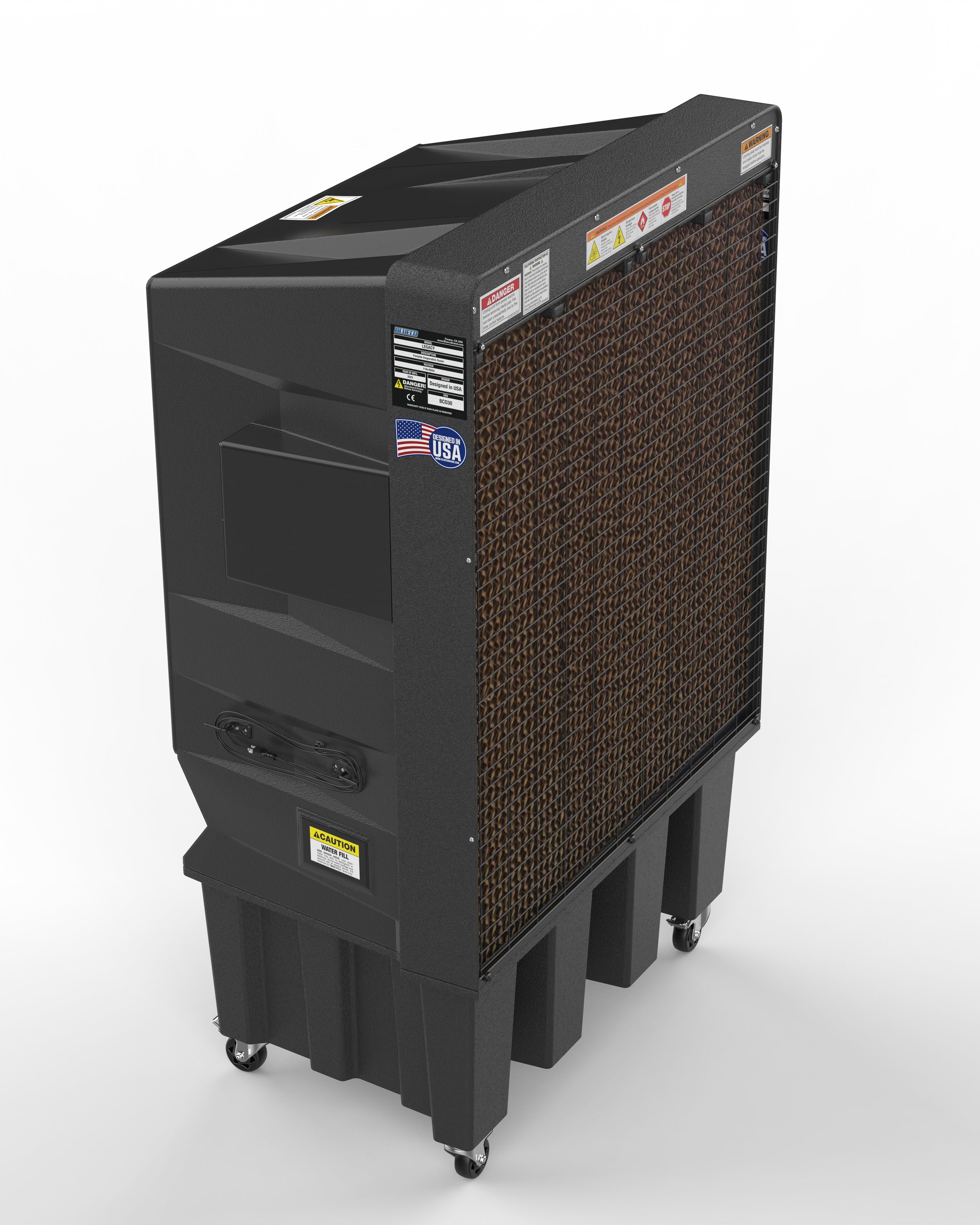
When a portable evaporative cooler operates, it pulls warm air from the environment through water-saturated cooling pads. These pads, constructed from dense, honeycomb-like materials, maintain continuous moisture saturation through an automatic water distribution system. As hot, dry air passes through these wet pads, water on the pad surfaces evaporates, transforming sensible heat (heat you can feel) into latent heat (heat contained within water vapor). This transformation cools the air dramatically—typically 5-30°F depending on climate conditions—creating a refreshing breeze that flows into your space.
Air Distribution and Comfort Creation
Once cooled through evaporation, the now-cooler air—slightly more humid than the incoming air—is circulated into the target space by a powerful fan. Unlike traditional fans that create disruptive turbulence and localized drafts, evaporative cooler airflow creates a gentle, consistent breeze reminiscent of standing near a waterfall or mountain stream. This sensation of cooling, combined with the air's increased humidity, creates profound comfort improvements—workers report feeling 15°F cooler than actual temperatures suggest.
The air circulation from an evaporative cooler distributes uniformly across large areas. A single portable unit can effectively cool 1,000+ square meters in ideal conditions, covering expansive workshops, garage spaces, and outdoor patios with consistent air movement. This broad coverage means fewer units are required compared to traditional fans, reducing costs and installation complexity.
Climate Effectiveness and Humidity Considerations
Evaporative cooling effectiveness depends directly on the humidity level in surrounding air. The process works by introducing moisture into dry air through water evaporation. In dry climates where relative humidity remains below 40%, evaporative coolers achieve maximum efficiency—cooling air by 15-30°F is common. The lower the initial humidity, the greater the evaporative potential, and the more dramatic the cooling effect.
In humid climates where relative humidity exceeds 70%, evaporative cooling effectiveness diminishes significantly. Air already saturated with moisture cannot absorb additional moisture from evaporation, limiting the cooling effect. However, even in moderately humid conditions (40-70% humidity), evaporative coolers still provide measurable temperature reduction and improved air circulation. For regions where humidity fluctuates seasonally—dry mornings and humid afternoons—evaporative coolers typically perform well during peak temperature hours when humidity is lowest.
Evaporative Coolers vs. Traditional Air Conditioning: A Practical Comparison
Understanding the differences between evaporative cooling and air conditioning clarifies why each technology excels in specific applications.
Energy Consumption and Operating Costs
The most dramatic distinction between these technologies centers on energy consumption and cost. Traditional air conditioners operate by compressing refrigerant gas, an energy-intensive process requiring 1,000+ watts of continuous electricity. Operating an AC unit costs approximately $15-25 daily in regions with typical electricity rates. By contrast, evaporative coolers consume only 100-150 watts—roughly 75% less electricity than AC systems. Daily operating costs typically amount to just $1, representing potential annual savings of $4,000-$7,000+ for facilities running cooling systems continuously.
For workshops, garages, outdoor patios, and other spaces where cooling needs are seasonal or intermittent, these energy savings compound into substantial financial benefits. A facility running an evaporative cooler eight hours daily during summer months could save $1,200-$2,000 annually compared to AC operation—money that can be invested in other business priorities.
Environmental Impact and Sustainability
Air conditioning systems rely on refrigerant chemicals that have environmental implications, including potential contributions to ozone depletion and global warming potential. Additionally, the substantial electricity consumption of AC systems increases reliance on fossil fuel-based power generation.
Evaporative coolers produce zero chemical emissions and require minimal electricity, making them substantially more environmentally responsible. The technology integrates seamlessly with renewable energy systems like solar panels, enabling truly sustainable climate control. For businesses and homeowners committed to environmental stewardship, evaporative coolers represent a tangible way to reduce their carbon footprint while maintaining comfort.
Installation and Setup Simplicity
Installing a traditional AC unit typically requires professional technicians, involves complex ductwork installation, refrigerant handling, electrical modifications, and often costs $3,000-$10,000+ for medium-sized spaces. The process often requires permanent modifications to your building structure.
A portable evaporative air cooler, conversely, requires zero professional installation. Simply position the unit where you need cooling, fill the water reservoir, plug it into any standard electrical outlet, and begin enjoying cooled air immediately. This plug-and-play simplicity makes evaporative coolers ideal for renters, seasonal users, those with limited budgets, or anyone seeking flexibility.
Ideal Applications and Environmental Suitability
AC units excel in enclosed, climate-controlled environments where building doors and windows remain closed. They work effectively regardless of outside humidity levels and can achieve precise temperature control.
Evaporative coolers shine in open, semi-open, or well-ventilated environments: workshops with garage doors frequently opening, outdoor patios and deck spaces, warehouses with rolling doors, construction sites, outdoor event venues, and greenhouses. They're superior in dry climates and perform admirably in moderately humid regions. Facilities seeking to cool specific zones rather than entire buildings find evaporative coolers more cost-effective than AC systems.
Ideal Applications: Workshops, Garages, Patios, and Beyond
Evaporative coolers deliver exceptional performance across diverse applications, particularly environments where traditional AC proves impractical or economically inefficient.
Workshops and Maker Spaces
Workshops generate substantial internal heat from tools, equipment, and human activity. Cooling workshop environments maintains tool precision—metalworking and woodworking tools perform optimally within specific temperature ranges—and protects worker health and productivity. A portable evaporative air cooler placed centrally in a workshop creates consistent cooling that enables workers to maintain focus and productivity despite summer heat.
Workshop environments typically feature open doors and windows for ventilation and material movement, making evaporative coolers ideal. Unlike AC systems that prove wasteful when doors open and close frequently, evaporative coolers simply work harder with each air exchange, still consuming minimal electricity compared to air conditioning.
Automotive Garages and Service Centers
Auto mechanics face extreme heat in garages, particularly when large garage doors remain open for vehicle entry and exit. Evaporative coolers handle this dynamic perfectly—they cool effectively even with frequent door openings and provide broad coverage across expansive garage spaces. Temperature reductions of 15-20°F transform unbearably hot work environments into comfortable spaces where technicians can work safely and efficiently.
The cost-effectiveness proves compelling for garage operators—running an evaporative cooler eight hours daily throughout summer costs approximately $240 compared to $4,000+ for AC operation. This savings allows operators to invest in other facility improvements while maintaining superior worker conditions.
Patios and Outdoor Entertainment Spaces
Outdoor living spaces represent one of evaporative cooler's most compelling applications. Homeowners and hospitality businesses seek to extend their usable outdoor entertaining season into hot months. Evaporative coolers transform patios into comfortable gathering places where guests can enjoy outdoor space without succumbing to heat exhaustion.
The gentle, humid breeze from an evaporative cooler creates a refreshing sensation similar to waterfront environments. In dry climates, cooled air reduces perceived temperature by 15-30°F, enabling comfortable patio use during otherwise unbearable heat. The added humidity also benefits those with dry skin and respiratory sensitivity to dry air—a welcome side effect in arid regions.
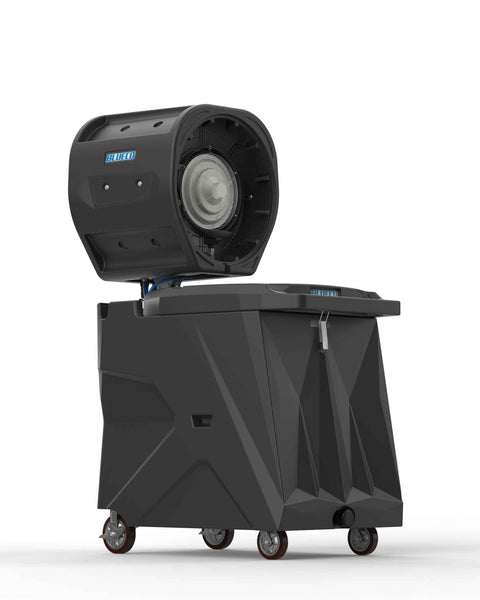
Portable evaporative coolers' mobility allows strategic placement: position the unit where guests congregate, then move it as the gathering evolves. Many models include carrying handles and wheeled bases, enabling repositioning without difficulty.
Warehouses, Loading Docks, and Industrial Spaces
Industrial facilities benefit enormously from evaporative cooling. Warehouses with loading docks that open frequently to vehicle traffic, outdoor work areas, and logistics centers find that AC proves wasteful and impractical. Evaporative coolers maintain cooler conditions while remaining economical despite constant door operations and large open areas.
The broad airflow coverage from portable and industrial-scale evaporative coolers ensures worker comfort across extensive spaces, improving productivity and reducing heat-related illness risks. For 24/7 industrial operations, the dramatic energy savings—often 75-90% compared to AC—translate into thousands of dollars monthly savings.
Greenhouses and Plant Nurseries
Plant growth depends on maintaining specific temperature ranges. Greenhouses naturally trap heat, creating extreme internal temperatures that stress plants and require cooling. Evaporative coolers provide humidity as they cool—a dual benefit that supports plant growth while reducing temperature. Unlike AC systems that dehumidify excessively, evaporative coolers maintain humidity levels plants prefer.
Climate Considerations: Where Evaporative Coolers Perform Best
Geographic location and seasonal climate patterns significantly influence evaporative cooler performance and suitability.
Optimal Dry Climate Performance
Evaporative coolers achieve maximum effectiveness in dry climates where relative humidity typically remains below 40%. Southwest US regions, desert areas, and other arid zones experience dramatic cooling benefits—temperature reductions of 20-30°F are common. In these environments, evaporative coolers outperform all other economical cooling options, delivering comfort at minimal cost.
Residents and businesses in dry climates find evaporative coolers produce such exceptional cooling that AC units become unnecessary except in specialized circumstances. The technology was literally invented for desert climates and remains optimized for such environments.
Moderate Humid Climate Adaptation
Many US regions experience moderate humidity—typically 40-60% relative humidity during peak heat periods. Spring and early summer often bring lower humidity when temperatures rise most dramatically. Evaporative coolers perform effectively during these periods, delivering noticeable cooling and comfort improvements.
Facility operators in moderate-humidity regions can leverage seasonal variations by deploying evaporative coolers during periods of lower humidity when effectiveness peaks. Even when humidity reaches 60-70%, evaporative coolers still provide measurable temperature reduction and air circulation benefits, though not to the degree seen in drier conditions.
High-Humidity Climate Limitations
In coastal regions, humid subtropical areas, and high-humidity zones where relative humidity regularly exceeds 75%, traditional evaporative coolers face significant performance limitations. The air is already moisture-saturated, leaving minimal evaporative potential. While cooling still occurs, the magnitude of temperature reduction diminishes substantially.
For high-humidity regions, hybrid cooling systems combining evaporative pre-cooling with AC units offer effective solutions. The evaporative stage cools and dehumidifies partially, reducing the AC load by 30-50%, lowering overall energy consumption while maintaining comfort.
Energy Efficiency and Cost Benefits: Understanding the Financial Impact
The economic advantages of evaporative cooling extend far beyond simple operating cost comparisons.
Direct Operating Cost Savings
Operating an evaporative cooler costs approximately $1-2 daily, totaling $300-600 annually for continuous summer operation (roughly May-September in most US regions). By comparison, traditional AC operation costs $15-25 daily during equivalent periods, totaling $4,500-7,500 annually.
A facility switching from AC to evaporative cooling saves $3,900-7,200 annually in electricity costs alone. Over a five-year period, potential savings reach $19,500-36,000—funds that can be redirected toward facility improvements, equipment upgrades, or business expansion.
Lower Upfront Investment
A quality portable evaporative air cooler typically costs $300-1,500 depending on size and features. Compare this to AC installation costs ($3,000-10,000+) and the financial advantage becomes clear. For budget-conscious businesses and homeowners, evaporative coolers provide immediate access to effective cooling without substantial capital investment.
Maintenance Cost Minimization
Evaporative coolers feature simple designs with minimal moving parts. Primary maintenance involves replacing cooling pads seasonally (typically 2-3 times yearly at $20-50 per pad set) and ensuring water systems remain clean. Total annual maintenance costs rarely exceed $100-200.
Air conditioning systems, conversely, require professional servicing, refrigerant recharging, compressor repairs, and replacement parts that collectively cost $300-600+ annually. Over the equipment's lifetime, evaporative coolers' maintenance cost advantage compounds substantially.
Return on Investment Timeline
A facility investing $1,000 in a quality portable evaporative cooler with annual operating and maintenance costs of $500 compared to AC costs of $6,000+ achieves positive ROI within months. By year two, the cooling system has essentially paid for itself through cumulative energy savings, with subsequent years yielding pure profit as operational efficiency continues.
Portable Evaporative Coolers: The Ultimate Flexibility Solution
Portability transforms evaporative coolers into uniquely versatile cooling solutions for modern living and working spaces.
Mobility and Flexibility
Unlike permanently installed AC systems, portable evaporative air coolers move effortlessly between locations. Wheeled bases and ergonomic handles enable single-person repositioning. Cool your workshop during business hours, your patio during evening relaxation, then your garage overnight—all with a single unit.
This flexibility proves invaluable for renters unable to make permanent modifications, businesses with seasonal cooling needs, or anyone seeking cooling solutions without long-term commitment. The ability to scale cooling across multiple spaces with a single portable unit maximizes cooling investment efficiency.
Seasonal Mobility and Storage
In northern climates where cooling is seasonal, portable evaporative coolers store easily during winter months. Simply drain the water system, clean components, cover the unit, and store in climate-controlled space until next cooling season. This simplicity stands in stark contrast to permanent AC systems that remain partially exposed and vulnerable to winter weather throughout the off-season.
Zero Installation Complexity
There's genuinely nothing to install with a portable evaporative cooler. No ductwork, no electrical modifications, no professional contractors, no building modifications. Place the unit, fill the water tank, plug in, and start cooling. This plug-and-play simplicity democratizes access to effective cooling—anyone can deploy an evaporative cooler.
Installation, Setup, and Operation: Getting Started Simply
Establishing an evaporative cooler in your space requires minimal preparation and effort.
Location Selection
Position your portable evaporative air cooler centrally in the space you wish to cool, ideally in an area where the fan outlet points toward occupants. The unit works most effectively in spaces with some ventilation—partially open doors or windows, or open areas like patios, facilitate air circulation and evaporative effectiveness.
Avoid placing coolers in fully enclosed, sealed spaces where exhaust air has nowhere to go. Evaporative coolers work by moving air, so spaces need to allow displaced air to escape (typically through open doors or windows).
Water Tank Filling and Initial Startup
Fill the cooler's water tank with fresh water above the minimum level marker. Most units include automatic water replenishment systems that maintain optimal pad saturation without manual intervention. Turn on the unit, and cooled air typically begins flowing within seconds.
Operation and Speed Adjustment
Most evaporative coolers feature multiple fan speed settings. Start at low speed, then increase as needed to achieve desired cooling. Higher speeds consume more electricity but deliver greater cooling effect—adjust according to your preferences and efficiency priorities.
Maintenance During Operation
Check water tank levels weekly during operation, refilling as needed. Monthly, inspect cooling pads for dirt accumulation and clean or replace them as necessary. This simple maintenance ensures consistent performance throughout the cooling season.
Maintenance and Longevity: Preserving Your Cooling Investment
Regular maintenance ensures your evaporative cooler delivers optimal performance for years.
Routine Monthly Maintenance
Monthly, unplug the cooler and inspect cooling pads. If they show dirt accumulation or damage, rinse with clean water or replace per manufacturer recommendations. Check the water tank and pump for sediment or algae growth, cleaning if necessary. Inspect fan blades for dust accumulation and wipe clean.
Seasonal Pad Replacement
Cooling pads should be replaced at least twice during the cooling season, more frequently if the cooler operates continuously. Worn pads lose evaporative efficiency, reducing cooling effectiveness. Replacement pads are inexpensive ($20-50) and take minutes to install.
Pre-Season Deep Cleaning
Before beginning each cooling season, perform a thorough inspection and cleaning. Drain and flush the water tank, clean intake and outlet areas, inspect motor and fan for debris, and ensure all components function properly. This seasonal maintenance prevents problems before they develop.
Off-Season Storage
At season's end, drain the water tank completely, clean all components thoroughly, and store in a clean, dry location. Cover the unit to protect against dust accumulation. This care ensures the cooler starts the next season in optimal condition.
Expected Lifespan
With proper maintenance, quality evaporative coolers deliver 5-10+ years of reliable service. Many units operate successfully for 15+ years with minimal repairs. The simple design and absence of complex mechanical systems means fewer components fail, and replacement parts are typically inexpensive.
Frequently Asked Questions About Evaporative Coolers
Q: How much cooler does an evaporative cooler make an area?
A: Temperature reduction varies with humidity. In dry climates (below 40% humidity), expect 15-30°F cooling. In moderate humidity (40-60%), expect 10-15°F reduction. In high humidity (above 70%), cooling effect diminishes to 5-10°F. Evaporative coolers also create subjective cooling through air circulation and humidity—occupants often report feeling 15°F cooler than actual measurements.
Q: Do I need to leave doors or windows open when using an evaporative cooler?
A: Yes, evaporative coolers work by moving air through a space. Some ventilation—typically an open door or window—allows displaced air to exit and maintains air circulation. In completely sealed spaces, cooling effectiveness dramatically reduces as interior air pressure rises.
Q: Can evaporative coolers work in humid climates?
A: They can, but effectiveness decreases. In areas where humidity regularly exceeds 70%, evaporative coolers provide modest cooling (5-10°F reduction). Many humid-climate users employ them during lower-humidity periods (spring, early morning) or combine them with AC through hybrid systems for year-round comfort.
Q: How often do I need to replace cooling pads?
A: Typically 2-3 times per cooling season in normal use. In continuous operation or areas with hard water, replacement may be more frequent. Some users extend pad life through regular cleaning. Always follow manufacturer recommendations based on local water hardness and usage patterns.
Q: Are evaporative coolers noisy?
A: Most portable evaporative coolers operate quietly—typically 60-70 decibels at low-to-medium speeds. This is quieter than most traditional fans and substantially quieter than AC units. Some users find the gentle air circulation sound actually pleasant and conducive to focused work.
Q: Can I use an evaporative cooler indoors in an apartment?
A: Portable evaporative coolers work indoors, though some ventilation helps. In completely sealed apartments, effectiveness decreases and indoor humidity may rise noticeably. Units work best in apartments with operable windows or where you don't mind modestly increased humidity.
Q: What's the difference between evaporative coolers and swamp coolers?
A: These terms are synonymous—"swamp cooler" is simply a colloquial name for evaporative coolers, historically coined because they're popular in swampy, humid regions where any cooling is valuable. Modern portable evaporative air coolers work best in dry climates, though they still function in humid environments with reduced effectiveness.
Q: How often should I fill the water tank?
A: In normal operation, tanks typically need refilling daily or every 1-2 days. Usage varies with humidity, temperature, and ambient conditions. Many units include automatic water replenishment, refilling pads automatically without manual intervention needed.
Q: Can I use recycled or filtered water?
A: Fresh water is recommended to prevent sediment and mineral buildup. Hard water (mineral-rich water) causes mineral deposits on cooling pads, reducing efficiency. Some users employ water filters or use distilled water to extend pad life, though fresh tap water is typically adequate.
Q: Do evaporative coolers require professional installation?
A: No. Portable evaporative coolers require zero professional installation—simply position, fill the tank, and plug in. No ductwork, electrical modifications, or contractor expertise needed. This simplicity is one of evaporative coolers' greatest advantages.
Transform Your Spaces with Efficient, Affordable Evaporative Cooling
Evaporative coolers represent a smart, efficient, and environmentally responsible approach to keeping workshops, garages, patios, and outdoor spaces comfortable during hot months. By harnessing the natural power of water evaporation, these systems deliver exceptional cooling performance while consuming a fraction of the energy required by traditional air conditioning.
Whether you operate an automotive garage seeking to maintain worker comfort and productivity, manage a workshop requiring consistent temperature control, own a patio you want to transform into a cool summer sanctuary, or run industrial facilities with open-door operations, a best evaporative air cooler from BlueCo Brand offers the ideal solution. The combination of energy efficiency, low operating costs, environmental responsibility, easy portability, and simple maintenance makes evaporative cooling the clear choice for discerning facility operators and homeowners.
Ready to experience the benefits of portable evaporative cooling in your workshop, garage, or patio space? Explore our comprehensive collection of portable evaporative coolers at BlueCo Brand to discover the perfect model for your specific needs and space dimensions. Our cooling experts are ready to help you select the ideal evaporative air cooler for optimal performance and maximum satisfaction.
Transform your space into a cool, comfortable environment today. Visit our homepage or contact our team for personalized recommendations on achieving efficient, affordable cooling for any application.
BlueCo Brand - Portable Evaporative Cooler Solutions
- Address: 2615 N Arygle , Fresno CA
- Phone: 1-866-865-1902
- Email: Support@bluecobrand.com
For expert guidance on selecting the best evaporative air cooler for your workshop, garage, patio, or industrial space, visit our homepage or explore our complete collection today.
Share:
What Is an HVLS Fan and How Does It Work?
Material Handling Essentials: When to Use a Straddle Leg Stacker vs Forklift